Charity services
The genuine partnerships we share with our charity clients expand far beyond investment management.
Get in touch

The genuine partnerships we share with our charity clients expand far beyond investment management.
Get in touchBuilding genuine partnerships
atomos has long-term partnerships with charities and charitable trusts operating as a UK-based charity investment manager. We support trustees in managing and investing charitable assets responsibly, balancing capital preservation, income needs, and long-term growth in line with each charity’s objectives and governance requirements.
We work with organisations including NHS and healthcare charities, grant-making trusts and foundations, educational and community charities. Our approach is tailored, transparent, and disciplined, with clear reporting and ongoing oversight to help trustees make informed, confident investment decisions.
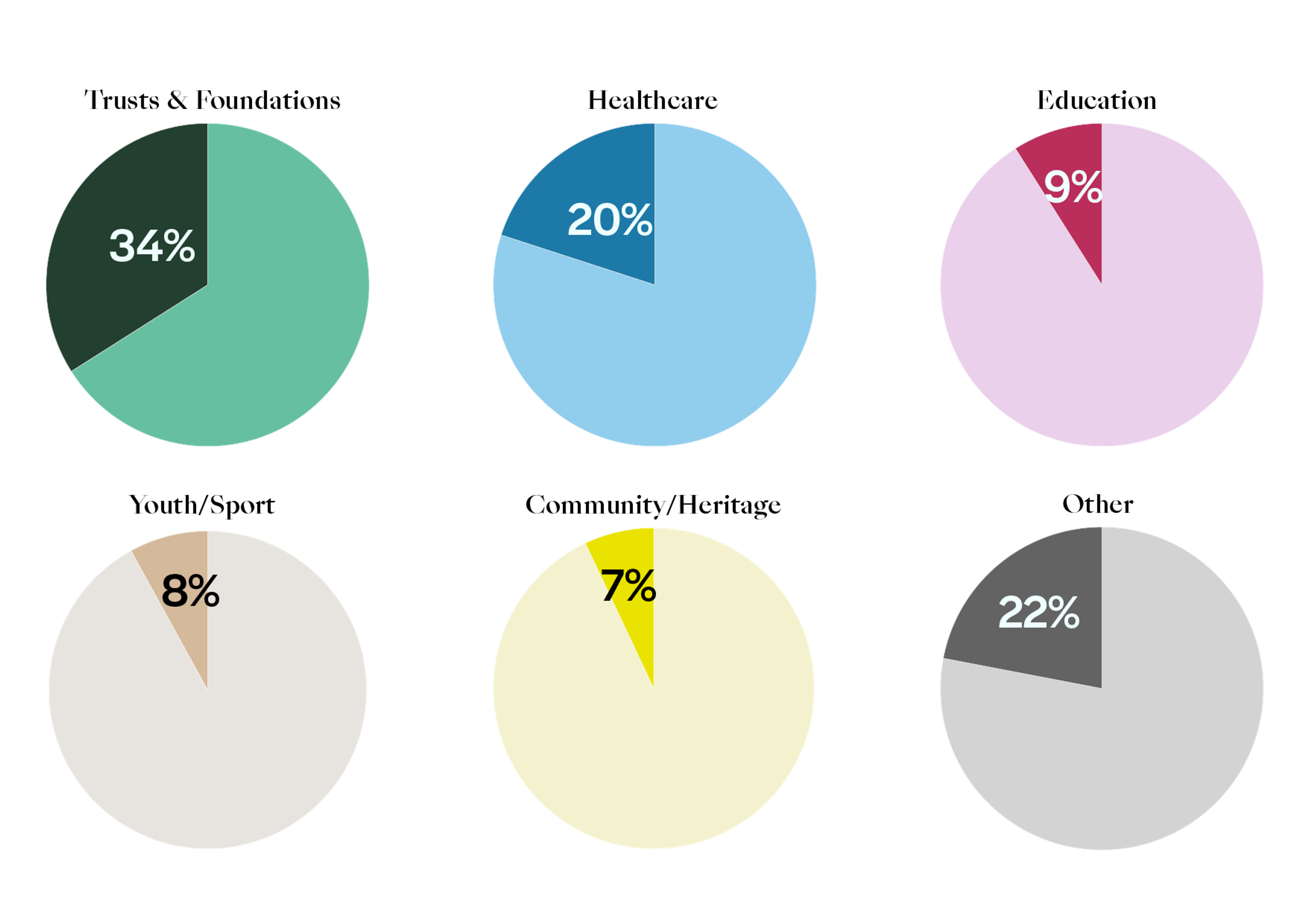
We work with a broad range of UK charities, each with distinct objectives, governance structures, and funding needs. The charities we support typically fall into the following groups: Trusts & Foundations, Healthcare, Education, Youth/Sport and Community/Heritage.
Charity trustee
Our dedicated charity investment team supports trustees at every stage of their investment journey.
Frequently Asked Questions
What should charity trustees consider before investing charity money?
Before investing charity funds, trustees should begin with the charity's objectives rather than investment markets.
Key considerations include how much money the charity needs to spend each year, the level of reserves it should maintain, how long funds can remain invested, and how much short-term fluctuation the charity could tolerate without affecting its work.
Trustees should also consider whether there are any ethical or mission-related factors that are relevant to the charity's investment approach.
A helpful question is: "What is this money for, and when might we need it?" The answer often provides the foundation for an appropriate investment strategy.
Ultimately, investment decisions should support the charity's ability to deliver its purpose, both for today's beneficiaries and for those it may serve in the future.
How can a charity balance cashflow needs with long-term investments?
Many charities need to meet current spending commitments while preserving capital for future beneficiaries.
A useful starting point is understanding when money is likely to be needed. Funds required over the next one to three years may need to remain readily accessible, while capital that is unlikely to be needed for longer periods can potentially be invested with a longer-term perspective.
The right balance will depend on the charity's spending policy, reserve levels, income sources and future plans.
Taking time to map out expected cashflows can help trustees avoid holding excessive amounts in cash whilst maintaining confidence that the charity can continue to meet its commitments.
You can read our article Spending vs Preserving: The Permanent Charity Dilemma to find out more.
What investment options are available to charities?
Charities can access a wide range of investment options, including cash deposits, fixed income investments, multi-asset portfolios and more bespoke investment strategies.
The most suitable approach will depend on factors such as the charity's objectives, time horizon, governance capacity and need for income or capital growth.
Rather than starting with individual investments, trustees are often best served by first defining what success looks like. For some charities, that may mean generating a sustainable level of income. For others, it may involve preserving the long-term value of reserves or growing capital to support future activities.
Understanding the trade-offs between growth, income, liquidity and risk is an important part of the decision-making process.
What support is available for new charity trustees?
Many trustees bring significant professional experience to their role but may have limited experience of charity investments or financial governance. That is entirely normal.
New trustees often benefit from support in understanding their responsibilities, reviewing investment policies, interpreting investment reports and assessing risk within the context of the charity's objectives.
The most effective support is usually practical and jargon-free. Trustees do not need to become investment experts, but they should feel confident asking questions, challenging assumptions and understanding how investment decisions contribute to the charity's long-term success.
Strong governance comes from informed decision-making, not specialist knowledge alone.
How do charity trustees make investment decisions in line with their duties?
Trustees have a duty to act in the best interests of their charity and to ensure that investments support its purposes and long-term sustainability.
This involves setting clear objectives, understanding the risks involved, considering liquidity requirements and taking appropriate advice where necessary.
Good governance also means documenting decisions and reviewing them periodically as circumstances change. A strategy that was appropriate five years ago may no longer be suitable if the charity's finances, spending requirements or objectives have evolved.
Trustees should be able to explain how investment decisions support the charity's aims and why they believe the chosen approach is in the charity's best interests.
Many trustees of charities and charitable trusts face complex investment, governance, and reputational considerations. Our approach combines professional investment management with practical trustee support, helping you make informed decisions with confidence.
We’re here to listen. Get in touch and arrange a free consultation to find out what we can do for your charity.
The value of investments and any income from them can fall and you may get back less than you invested.

The value of investments and any income from them can fall and you may get back less than you invested.


